- Hidden directions in retrieved pages test the boundary between evidence and authority.
- MiniMax and Inception offer new serving choices; accepted-task cost and end-to-end latency remain local measurements.
- Fresh research makes the evaluation instrument and the preservation of task state part of the system design.
Where capability meets the work.
Enterprise Ops4 min read
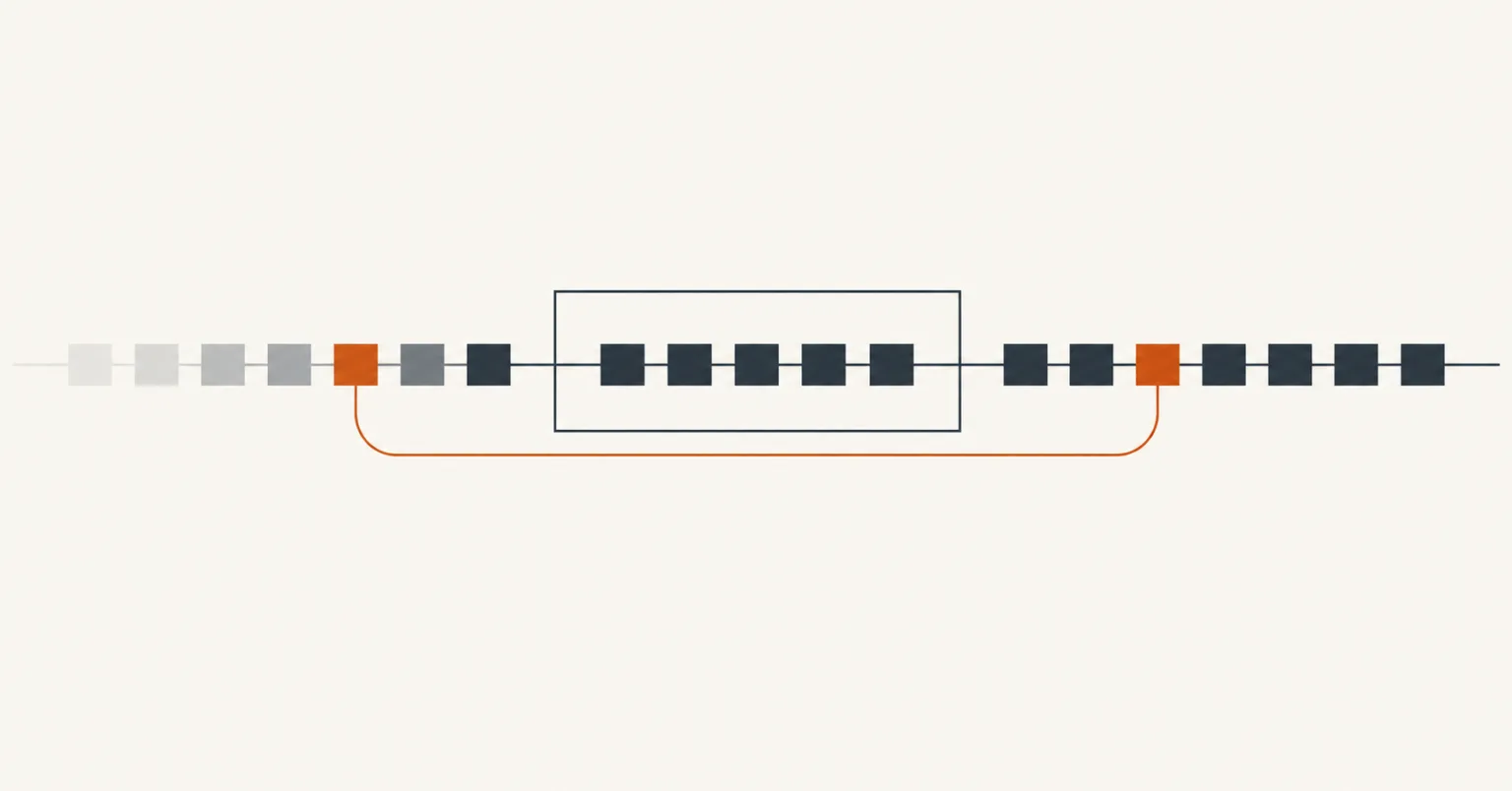
New research separates the cost of losing context from the cost of losing evidence that cannot be recovered. Enterprise agents need a deliberate policy for preserving task state across long runs.
As a leader: Identify which task facts become unavailable later and require the harness to preserve them explicitly.
As an individual: Test a long-running task after context compression, checking whether its essential evidence remains recoverable.
Read the analysis →
Models, platforms, and the choices they create.
Vendors4 min read
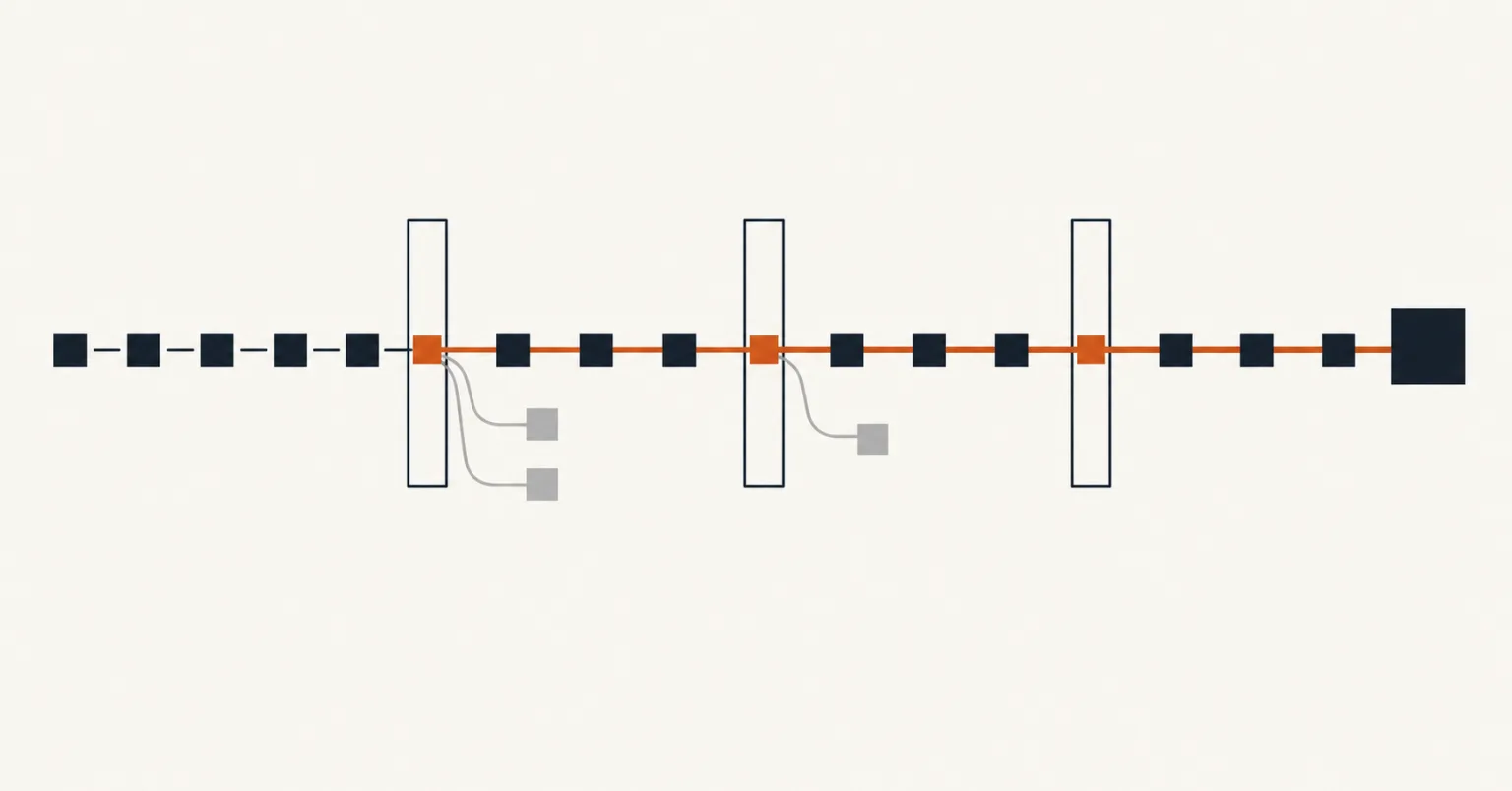
MiniMax’s M3.1 Flash announcement pairs lower quoted prices with agent benchmarks. The useful enterprise comparison is the cost of an accepted outcome, including retries, review, and failures.
As a leader: Compare models using cost per accepted task on your own workflow, with review and failure costs included.
As an individual: Keep the task, tools, and acceptance criteria fixed when testing a cheaper model.
Vendors4 min read
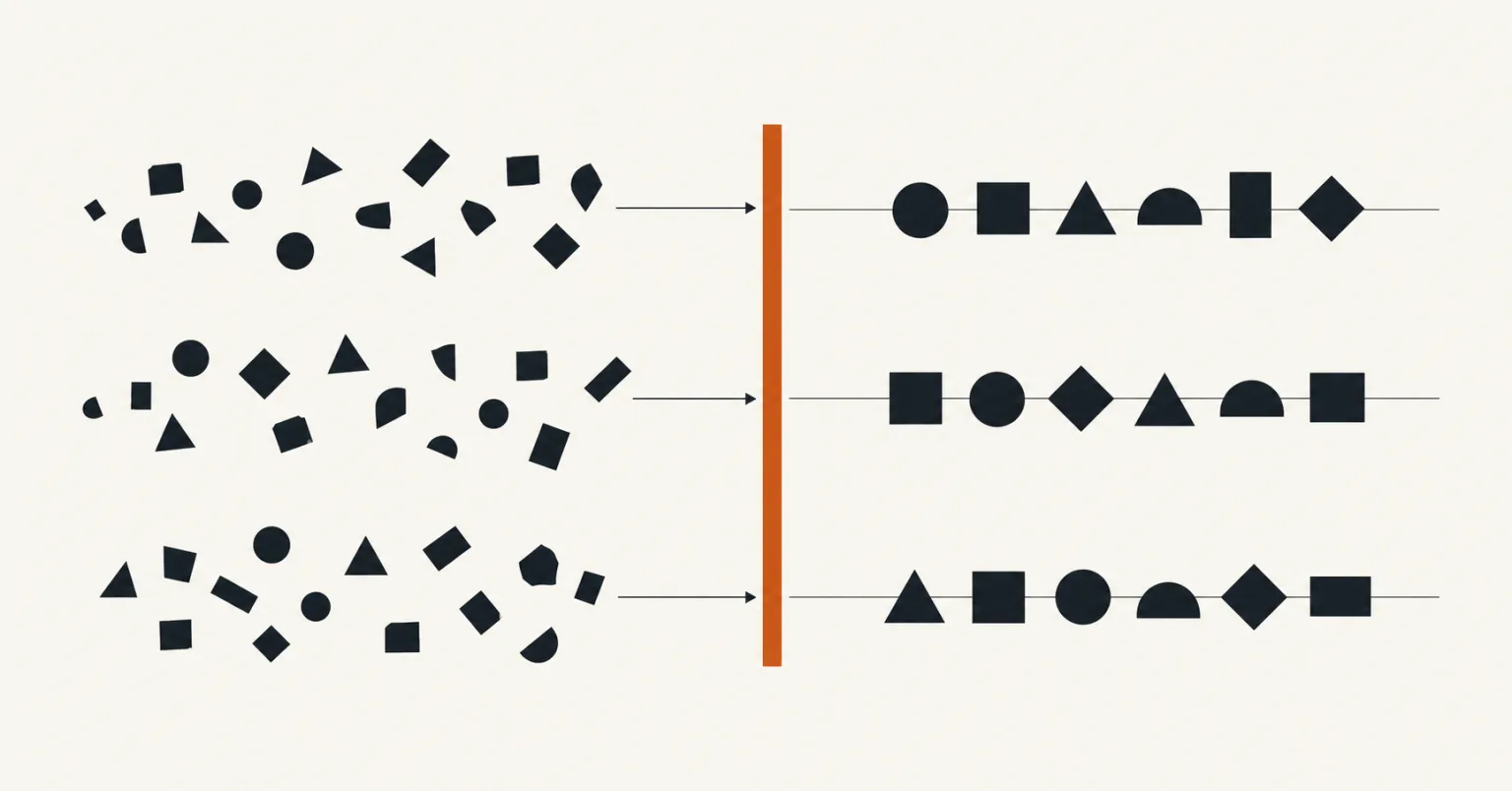
Inception’s diffusion-model release makes a case for faster interactive AI. A production evaluation still needs to measure the complete task, especially where waiting on tools or verifying actions dominates.
As a leader: Measure end-to-end task latency and acceptance alongside model generation speed before changing an interactive service.
As an individual: Separate time spent generating, waiting for tools, and checking results in one representative agent trace.
The boundaries that need to hold.
Security4 min read
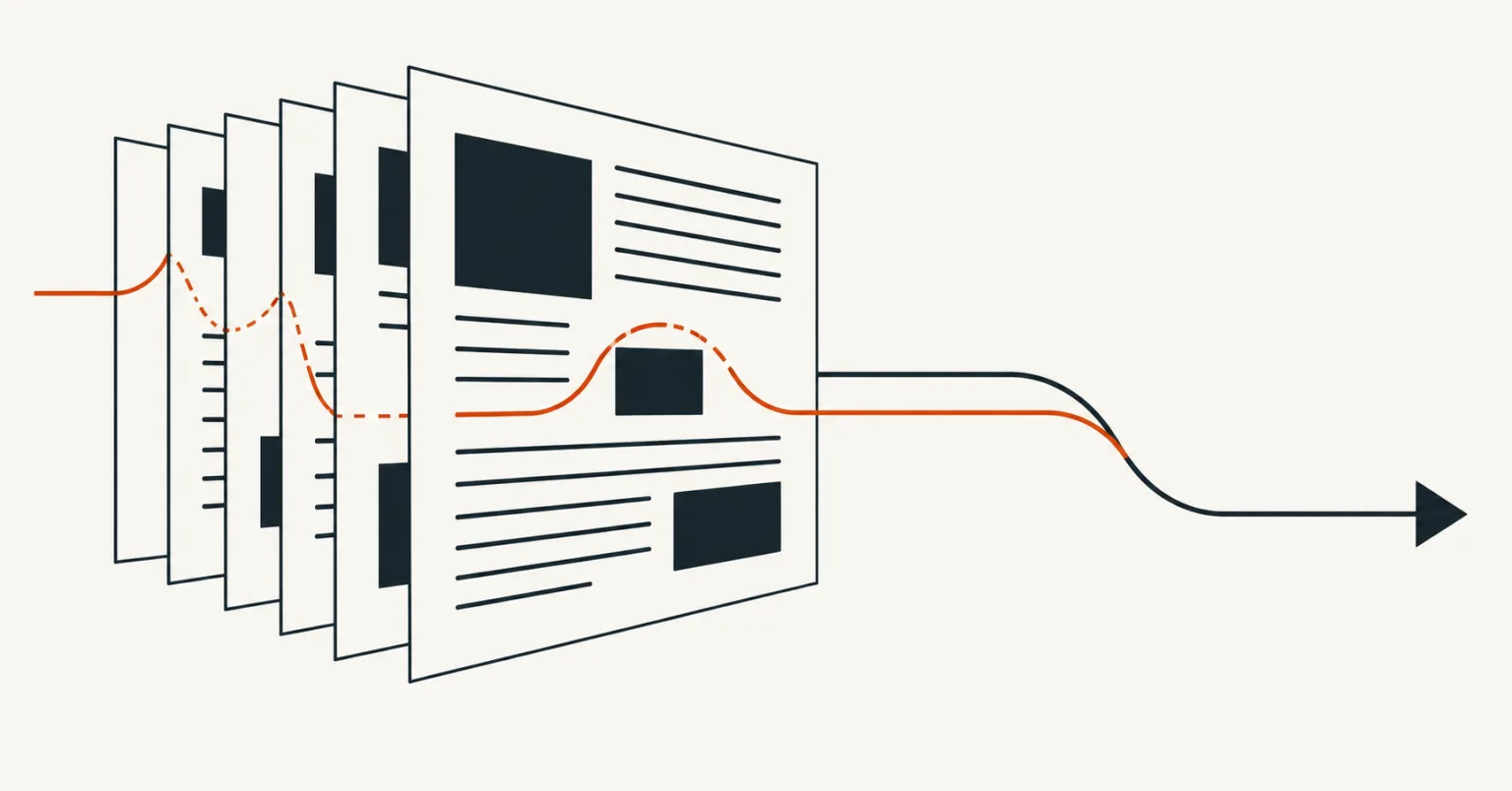
Redact’s WhatsApp investigation shows why a retrieved page can contain instructions as well as information. An enterprise assistant needs a clear rule for which material may influence its behavior.
As a leader: Require assistants to distinguish retrieved evidence from instructions authorized by your organization and the user.
As an individual: Check what the retrieval tool actually returns, including text that a normal browser view does not show.
Security4 min read
A new preprint examines how fine-tuning and reasoning settings can change model behavior. Its practical contribution is a reminder to validate the measurement before treating a safety score as stable.
As a leader: Require a measured evaluation baseline when approving fine-tuning or inference-configuration changes.
As an individual: Preserve the scoring configuration and examine disagreements before concluding that behavior improved or regressed.
- Consistency Training Suppresses Cue Following Without Teaching Cue Selectivity ↗
Researchers evaluated four consistency training methods-BCT, ACT, AttCT, and RMCT-on Gemma-2-2B-it and Llama-3.1-8B-Instruct models to reduce language models' sensitivity to cues that do not provide valid evidence. All methods decreased the effectiveness of trained cues but did not differentiate between correct and incorrect cues, with the largest effect observed for cues before answer options. The study found that residual circuit components still carried most cue-induced errors, and making training targets depend on cue correctness weakened the effect. These results suggest that consistency training suppresses cue following without teaching models to selectively respond to valid cues.
- Diffusion Language Models Change Speed Across Tasks and Languages ↗
Researchers studied two diffusion language models across 10 tasks to understand why the computational cost varies during text generation. They found that tasks involving copying or lightly editing input text require fewer forward passes per token, while open-ended writing demands significantly more, with story writing needing over three times the passes of grammar correction. The cost differences relate to how much of the output is new relative to the input and the rarity of words used. In multilingual settings, languages with more tokens also incur higher costs per token. Additionally, the models' decoding effort correlates with correctness, as incorrect answers to the same math problems require more passes than correct ones. These findings suggest that diffusion models' efficiency depends on the predictability of the output and that decoding speed can serve as a practical signal to improve inference reliability and efficiency.
- Measurement Validity and Representation Dynamics of Confidence Signals in Large Language Models ↗
Researchers conducted a pre-registered audit of five Qwen2.5 models ranging from 0.5B to 7B parameters to evaluate three confidence measurement methods: verbalized confidence, linear probes on hidden states, and agreement among sampled answers. They tested these methods on factual retrieval datasets (PopQA, SimpleQA) and multi-step reasoning tasks (GSM8K, MATH) to assess how well models "know what they know." The study found that probes predicting answer disagreement become informative earlier in retrieval tasks than in reasoning, but early signals may reflect surface question features. Verbalized confidence was unstable across prompt templates, and Expected Calibration Error metrics were misleading, with sampling agreement showing better resolution despite worse calibration scores.
- Require assistants to distinguish retrieved evidence from instructions authorized by your organization and the user.
- Compare models using cost per accepted task on your own workflow, with review and failure costs included.
- Measure end-to-end task latency and acceptance alongside model generation speed before changing an interactive service.
Editor’s notes and source record
Reconstructed from the feed repository at 12782958b974aee6d52b266f152a48670e200f0a. Checked 228 curated and 80 ranked entries. Full coverage uses verified original-source timestamps, not the feed’s curation date. Late-arriving, undated, inaccessible, conflicting, and overlapping stories were excluded. Related research is grouped by enterprise decision; remaining eligible research may appear as short links. Published 5 complete analyses with original generated heroes. Source facts are attributed; practical implications are editorial interpretation.
Coverage: 2026-10-19T00:00:00+00:00 → 2026-10-20T05:00:00-07:00
Historical feed snapshot ↗