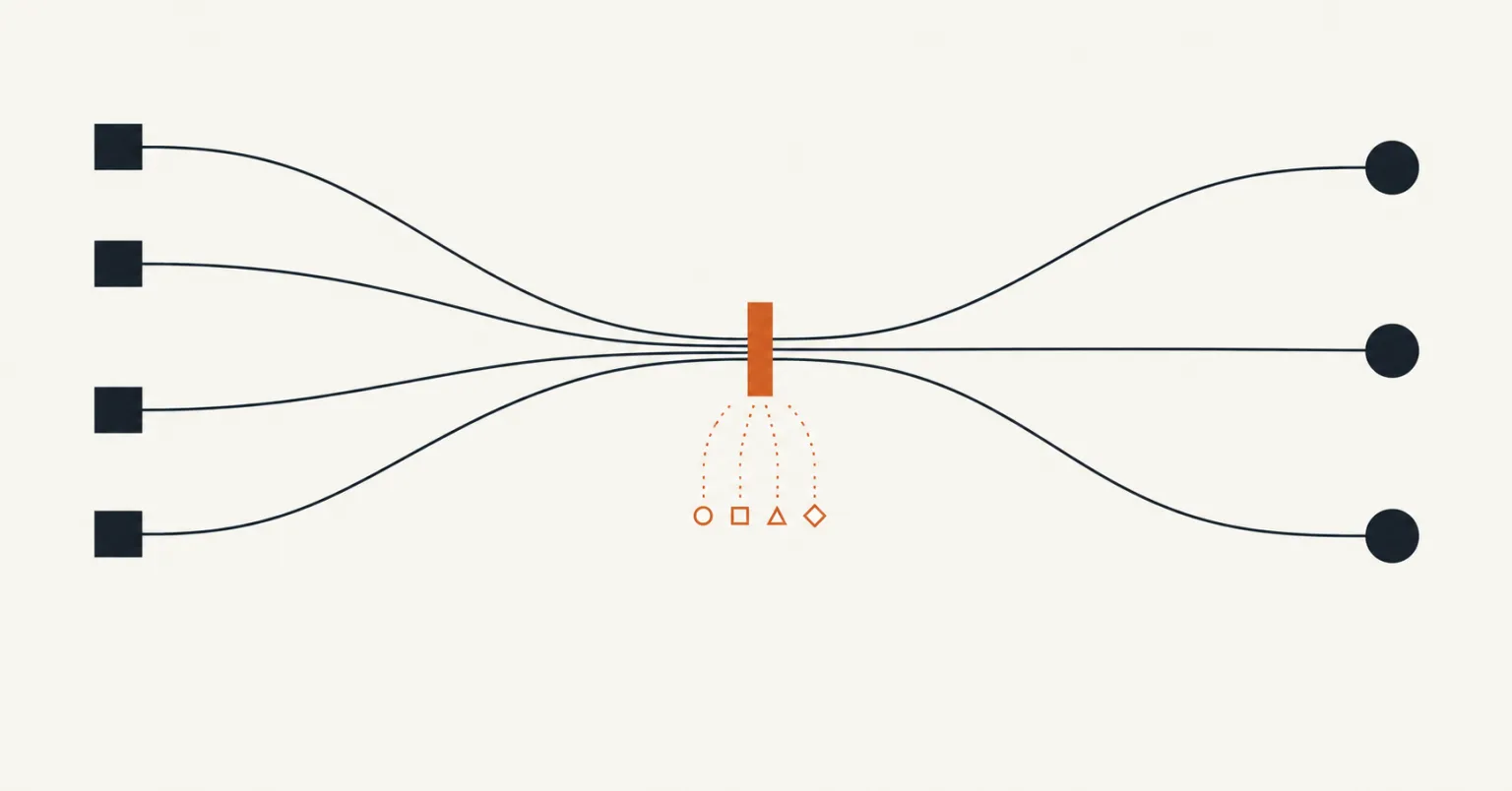
A bill can tell you that tokens were consumed. Try using it to explain why a particular person received the wrong answer. Once applications, agents, and teams share providers and credentials, the total at the bottom of the page leaves a great deal of the working story untold. A model dashboard can have the same limitation.
In a practitioner’s argument for operating an LLM proxy, the useful part is the operational inventory: a controlled endpoint, records of which key called which model, virtual credentials, and the ability to change a provider without rebuilding every client. The author describes a personal and work practice, rather than presenting a controlled comparison or a universal product recommendation.
Start the buying conversation with the story you need to reconstruct. Who asked, which application acted, where did the request go, and who can investigate the answer? A proxy is one possible way to keep that story connected. Being able to explain the path of the request is the requirement. Decide what evidence and responsibility it needs before deciding which extra component to run.
Start with one request
Pick a real application and follow a request from the person or process initiating it to the response returned. Identify the application, its credential, the selected provider and model, the policy decisions applied along the way, and the outcome seen by the caller. If one of those transitions disappears from view, write down who can investigate it and what evidence they would need.
This exercise is more revealing than asking whether a platform supports a telemetry standard. A supported export does not establish that the relevant identifiers are present, that clocks and request IDs can be reconciled, or that the team responsible for an incident can access the records. Those are implementation questions to test directly.
Follow the small trace all the way through. You may find unrelated workloads sharing a credential, a routing change nobody can explain, or retries hidden inside an aggregate chart. You may also find that an existing managed gateway already gives the team what it needs. That is a useful result too: the requirement has been met without creating another component for somebody to support.
Separate identity from convenience
Virtual credentials are useful when they give an operator a narrower unit to understand, limit, and revoke. Their value diminishes if every client receives the same effective authority behind a different label. The review should therefore cover what a credential can do, which workload owns it, and how that relationship is maintained when staff or applications change.
A practical inventory should distinguish development tools, unattended agents, shared services, and human experiments. Those uses may have different retention, routing, and support needs. Putting them behind one endpoint does not make those differences disappear; it makes the gateway a place where the differences can be represented deliberately.
The same discipline applies to provider switching. A common interface can reduce integration work, but a successful request is not evidence of equivalent behavior. Record which model actually handled the task and evaluate the behavior that matters to the application before changing the default.
Logs are another data product
Improved visibility can create an additional copy of sensitive material. The gateway design should therefore specify what is recorded, who can read it, and how long it remains available. Request metadata and full content serve different investigative purposes and deserve separate decisions.
For many operational questions, identifiers, timing, status, routing, and usage measurements may be the first evidence needed. Where full prompts or responses are necessary, access and retention should follow the sensitivity of the underlying work. Collecting everything indefinitely is not an observability strategy; it is an unbounded data-retention decision.
Test deletion and access as part of the pilot. A useful log should support an actual investigation while honoring the boundaries the organization has set for the data. The people operating the gateway need a documented way to obtain enough evidence without improvising broader access during an incident.
Give the gateway an owner
Now ask who answers when the extra hop stops working. The gateway needs people who can manage its configuration, availability, credentials, changes, and support. Include that work in the business case alongside the visibility and flexibility it offers. Centralizing the traffic can make a system easier to understand, but the person investigating a failure still needs somebody who can repair the place where the traffic meets.
Evaluate it with ordinary failure scenarios: a provider becomes unavailable, a model name changes, a credential is revoked, or a client sends an unexpected request. Decide what the caller should see and what the operator should be able to establish afterward. Avoid silently treating a fallback model as the same service unless the application has accepted that behavior.
Include the handoff between application support and platform operations in that exercise. Give each team the same failed request identifier and ask them to reconstruct what happened independently. Differences between their accounts reveal gaps in ownership as well as telemetry. Resolve those gaps before expanding the gateway to more workloads; adding more clients will make an ambiguous support boundary harder to investigate.
Before turning the discussion into a self-hosting project, ask a team to explain a representative request and a failure from end to end. Where the explanation breaks, name the missing evidence and the person responsible for it. Choose the smallest operating change that closes that gap. The useful gateway is the one that lets the person holding the failed request understand what happened next.