A server on your laptop is still a server. You may have brought the model closer to your work, but someone must still decide who can reach it, which inputs it accepts, and what happens when it fails. With local inference, that someone can be the person who opened the terminal.
Kapitsa’s October 23 release, v0.2.15, makes those responsibilities unusually visible. Alongside speed work, it includes input-handling fixes, packaging changes, and explicit testing qualifications. The README at that release’s source commit describes an Apple silicon inference engine for local coding models, with OpenAI and Anthropic API interfaces.
The useful enterprise question is what operating work comes home with the model.
Choose where the boundary sits
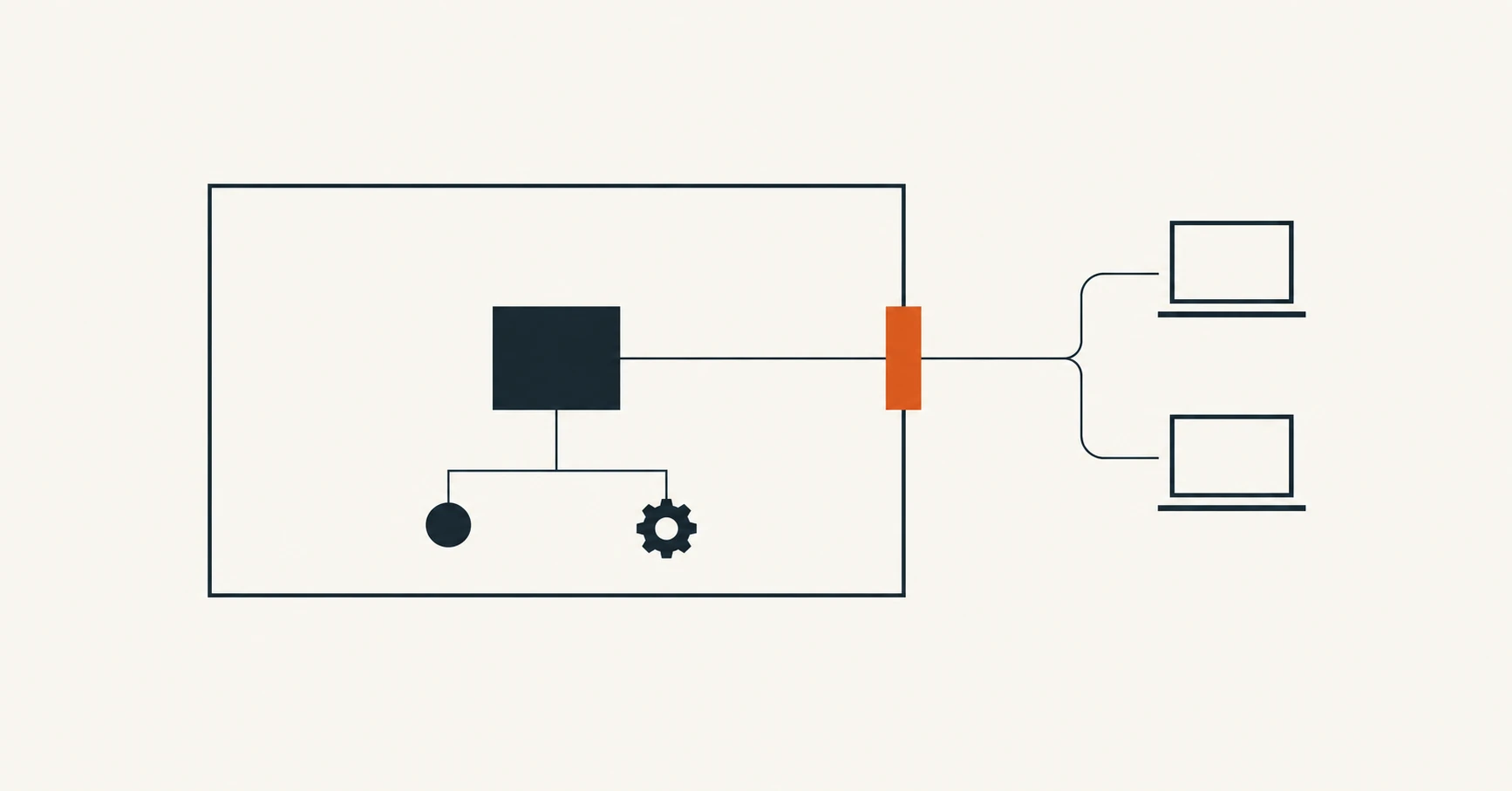
Think of a workshop’s switchboard. Having the machinery inside the building tells you where it runs. The switches tell you who can turn it on and which other rooms it connects to. A local model needs both kinds of description.
Kapitsa’s pinned usage guide says the default server listens on every address and requires no API key. Its documented --private option confines the service to the Mac, suppresses peer discovery, and prevents sending requests to other Macs. The guide also describes automatic routing to a peer that can hold a requested model in memory.
So where is your request actually processed? The answer depends on configuration. A team evaluating local inference should record that choice before giving an application access to internal material. Decide whether the intended service belongs to one developer or several machines, then check that the running configuration expresses that decision.
API compatibility can make the endpoint easy to connect. The people approving data access still need a description of the path behind it.
Read the fixes as operating evidence
The release notes report that the separate systemone server no longer crashes on questions longer than 2,048 tokens and rejects excessively deep JSON before parsing. They also describe a Flint Ultra decoding change as unverified on a GPU, and qualify the packaging work’s testing.
Those details belong in an evaluation. A coding session can accumulate long instructions, tool results, and structured messages. A small demonstration may never exercise the request shape that a working session eventually produces.
For a pilot, write down a few expected failures as carefully as the successful example. What should happen when a request exceeds a limit? Can the client distinguish rejection from a broken connection? Can the operator restore service without losing track of the task?
Use the documented limitations to choose checks for your own environment. A maintainer’s honest qualification gives you a place to investigate. It does not establish that the untested path works.
Ask what the fast number measures
Reading a prompt and writing an answer are different jobs. In inference terminology, prefill processes the incoming context; decode produces subsequent tokens. A person waiting for a coding suggestion experiences both, together with any queueing and tool work.
The release’s benchmark documentation records a downward revision of one M5 Pro 27B result to 606 tokens per second for prompt processing and 77 for decoding. It describes separate measurement sessions and cautions against assigning the differences to individual changes. A leaderboard cell needs that surrounding explanation.
The KFlash documentation explains another distinction. A smaller drafter proposes possible continuations. The target model checks a tree of candidates and keeps an accepted path. The document reports gains that vary with the prompt and qualifications around the 35B model’s behavior near numerical ties. The release also makes prompt-lookup rows opt-in until their extra work is justified by a cost model.
Picture a reviewer checking several possible next steps together. That can save work when useful candidates fit into the review. It can also spend effort checking branches the answer never uses. Whether the arrangement pays depends on the model, hardware, and task.
Keep those conditions attached to any comparison. Measure time to a useful accepted result, with the same task and review standard. A faster stream that needs another correction can leave the developer waiting longer. Yesterday in AI has not installed Kapitsa or independently reproduced its performance claims.
Decide what remembered work may retain
Faster follow-up turns can depend on retaining earlier work. Kapitsa’s SSD-cache documentation describes storing conversation state, including tokens, across restarts. It documents the cache location, permissions limited to the user’s account, and an option to disable the disk cache.
That is an operating choice with a human consequence. Someone who closes a coding session may reasonably need to know what persists afterward. The person maintaining the machine needs to know where to look when investigating storage, retention, or an unexpected result.
Make the retention decision part of the pilot’s setup. Record what the workflow permits the service to keep, how long it may remain, and who owns cleanup. Explain the choice to the people whose prompts enter the service.
Put a name beside the service
A useful first evaluation can be small: one approved task, a known machine, a recorded model and engine revision, and an agreed network configuration. Keep enough evidence to repeat a successful run and explain a failed one. Count the operator’s time alongside the developer’s time.
Then rehearse the ordinary interruption. The machine sleeps. A request is rejected. An update changes behavior. Who notices, who decides whether to roll back, and who tells the person waiting for an answer?
Local inference offers a way to place computation closer to the work. To make that useful, put an accountable person beside the switchboard.