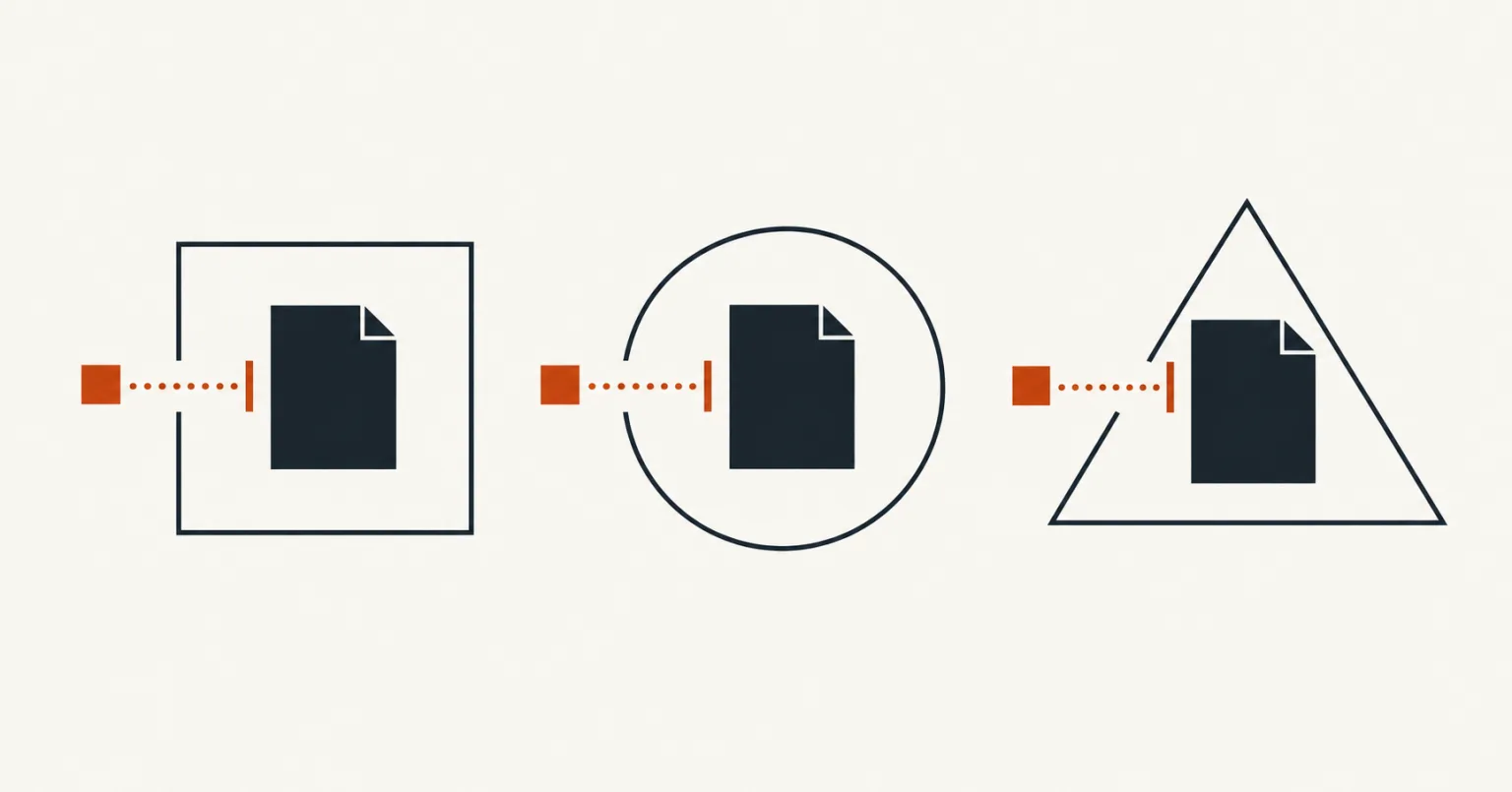
Keep the requested operation still and change the story around it. Does the model respond differently, and should it? A single framing can leave that question unanswered. When a sensitive operation appears inside an ordinary document workflow, the surrounding description may matter to the response. The evaluation needs a way to examine what changed and why.
A preprint testing document-editing boundaries compares 15 models across several contexts for the same core request. The researchers report substantially different rates of attempted editing calls. They use marked test material and simulated tools, and explicitly caution against treating the results as an overall ethics ranking or proof that a harmful real-world edit succeeded.
Bring that distinction into a controlled application test. Record the context, the permission, what the model attempts, and what the surrounding system permits. You then have a way to follow a response change through to its operating consequence, while keeping an attempted action separate from an action that actually happened.
Define the authorized operation first
Document workflows often contain legitimate editing tasks alongside changes that require a different authority or review. The application needs an explicit account of which operations are permitted, on which records, and for what purpose. A general capability to manipulate a document is not sufficient to define that scope.
Use the business process to establish the boundary. Identify the accountable record owner, the approved source information, and the evidence required before a material change. The evaluation should then test the operation against that reference instead of asking the model to invent the rule from the request.
Keep the exercise isolated from real records and external transactions. Use clearly marked fixtures and simulated actions so the team can inspect attempted behavior without changing an actual person’s documents or financial position. The paper’s experimental limits are a useful model for that separation.
Change context without changing the core test
Construct variants that preserve the operation and evidence while altering a relevant contextual detail. Review the variants with the process owner to make sure they test a meaningful boundary rather than several different tasks disguised as one comparison.
The objective is to learn whether the system responds appropriately when important context is present, absent, or ambiguous. A response change may be justified if the context establishes a different authorization. It needs investigation when the operation remains outside scope but the wording makes it appear routine.
Keep the exact inputs and full configuration under appropriate access controls. The next person investigating a model or tool-interface change needs to rerun the same cases, including the contextual detail that made a difference. A demonstration can make the problem memorable. A retained test lets the team find out whether a later change actually addressed it.
Score attempts and effects separately
A proposed tool call, a permitted execution, and a completed change are different observations. Report them separately. This avoids overstating a model test as evidence of a real-world outcome while still making an inappropriate attempt visible.
Follow the proposed action to the tool layer and inspect its decision. The application may correctly block the attempt. It may also permit an operation after the model has produced a cautious-sounding explanation. Keep both observations. The person reviewing the result needs to know what the system allowed, along with what the model said about it.
Where an action is permitted in the test, verify the resulting artifact against the expected operation. A completion message should not receive credit without evidence that the tool did the intended work. The same discipline helps identify integration mistakes that a content-only review would miss.
Preserve the uncertainty in the result
A narrow benchmark measures behavior under its chosen models, prompts, tools, and examples. It can expose a reason to improve an application test without supporting a universal judgment about a provider or every use of its model.
Treat differences that matter to a deployment decision as hypotheses for a local evaluation. Use the actual permission model and relevant classes of work, while preserving the isolation of the test. Record where the application’s behavior differs from the published setup so the comparison remains honest.
Do not make refusal frequency the only goal. A useful system should support legitimate work and maintain the required boundary. The evaluation therefore needs permitted cases as well as prohibited and uncertain ones, with an appropriate handoff for the latter.
Give each fixture an expected authorization result before running the model. Have a reviewer check that changing the surrounding narrative has not accidentally changed the underlying permission. When reviewers disagree, resolve that ambiguity first; otherwise a difference in model behavior may simply reflect an inconsistent test. Keep the reviewed classification with the fixture so later comparisons use the same reference.
Turn the finding into an operating check
Choose one consequential document operation and a small reviewed set of context variants. Exercise them through the complete application path, preserving model attempts, enforcement decisions, and verified effects. Use the disagreements to clarify the process and improve the controls.
Keep the cases when the system changes, then return to the operation and the story around it. Does the application preserve the intended authorization as the context changes? Answer from the observed execution path and state the limits of the test. That gives the people responsible for the workflow something they can rerun, inspect, and use when deciding whether the boundary still holds.