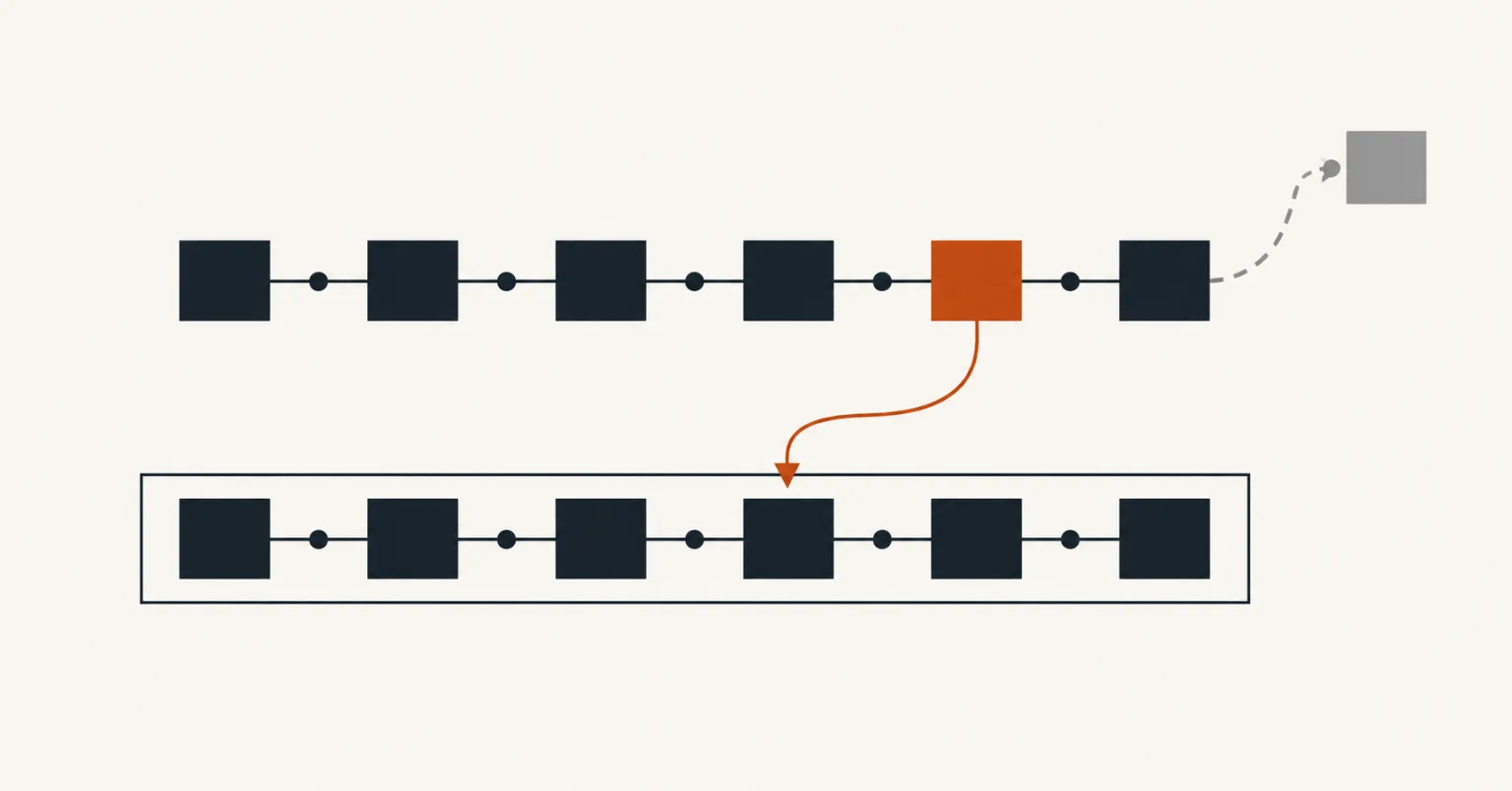
An undo button makes a promise about the way back. Before letting an agent propose, approve, and deploy its own changes, ask it to demonstrate that promise. Can the approving component recognize a bad change? If it approves one anyway, what exactly can the operator restore? Those questions give the appealing improvement loop a practical boundary.
A preprint on recoverability and verifier strength proposes measuring both properties before unattended improvement. In its experiments, some judge configurations produced effectively uninformative scores without reporting an error. Restoring a saved version recovered prior behavior more reliably than asking the system to generate an undo. These are results from the authors’ platform and controlled tests, not a certification rule for every deployment.
Draw the verifier and the recovery path on the diagram, then give each a job it has to demonstrate. The verifier must recognize the changes you expect it to reject. The recovery path must return the system to an understood state. Evidence of those jobs matters more than the reassurance the boxes lend to the diagram.
Give the verifier a known challenge
A verifier should be able to distinguish examples the organization regards as acceptable from examples it regards as unacceptable. Start with a small reviewed reference set, including changes whose failure is known. Record how the verifier behaves before using its approval as a release condition.
Include inputs that test whether the verifier is actually sensitive to the evidence. If a score remains the same when the relevant content is removed or replaced, investigate why. The preprint’s uninformative-judge cases make this a particularly useful control. A successful service response establishes availability, not judgment quality.
Keep the approval criteria tied to the behavior being changed. A verifier that is useful for a formatting edit may not be useful for a change to tool permissions or the interpretation of a policy. The approval boundary should reflect what has been tested, not just what the model can describe convincingly.
Preserve the exact artifact
Start the way back with the version that actually ran. Keep its prompt, configuration, code, relevant dependency identifiers, and the other artifacts required to restore the operating setup. Someone responding to a failure needs that specific object. A description of how the previous version behaved leaves them with another reconstruction problem at the moment they need a dependable restore.
Test the restore procedure under conditions close enough to reveal missing dependencies. A saved prompt is not sufficient if a tool contract or configuration changed alongside it. Define which components belong to the recoverable unit and verify that the unit can be restored together.
Asking an agent to reverse a change creates a new generated change that needs its own review. It may be a useful repair method, but it should not be labeled equivalent to restoring the preserved version. The distinction is especially important when the approval process itself may have failed.
Separate restoration from remediation
Returning the system to an earlier artifact does not necessarily reverse everything it did while the new version was active. A configuration can be restored while an already sent communication, changed record, or completed external action still needs attention.
This is an operating implication of recovery design, not a claim that the paper demonstrates those particular enterprise incidents. Inventory the actions that can have durable effects, and define how the team will locate and review them after a rollback. The execution record matters as much as the saved artifact.
Use that distinction when setting the allowed unattended scope. A narrow reversible edit with observable consequences creates a different recovery burden from a change that affects external decisions immediately. The organization should make that choice with a clear account of what restoration can and cannot accomplish.
Bound the improvement loop
Define which classes of changes the loop may make, what evidence it must preserve, and what causes it to stop. Repeatedly rewriting the verifier until it approves the proposed change would undermine the purpose of an independent release condition.
Keep the reference evaluation and approval rules under a separate change process. The improving agent can supply evidence and propose revisions, but the operating record should make it clear when the rules themselves changed. Otherwise a better reported result may simply mean a more permissive gate.
Put a name beside the limits. Who receives a failed verification, an unsuccessful restore, or an outcome the system cannot explain? The work may run unattended, but its exceptions still arrive somewhere in the organization. Give the person receiving them enough evidence and authority to decide what happens next, along with a support path they can actually use.
Time the restore exercise and verify the restored service, including its dependencies. Possessing a previous file is useful; demonstrating that it returns the workflow to an understood state is stronger evidence.
Demonstrate the failure path first
Before enabling unattended changes, introduce a deliberately unsuitable change in an isolated environment. Verify that the gate rejects it. Then exercise the restore path and inspect the records that would identify affected work. Use the result to decide whether the proposed scope is supportable.
A pilot can carry uncertainty if the people responsible can name what they are accepting. Put a measured verifier, the preserved prior artifact, and an exercised recovery procedure beside that decision. Then ask the person operating the loop to show the way back. The promise behind the undo button becomes useful when the team has demonstrated what it restores and what still needs attention.