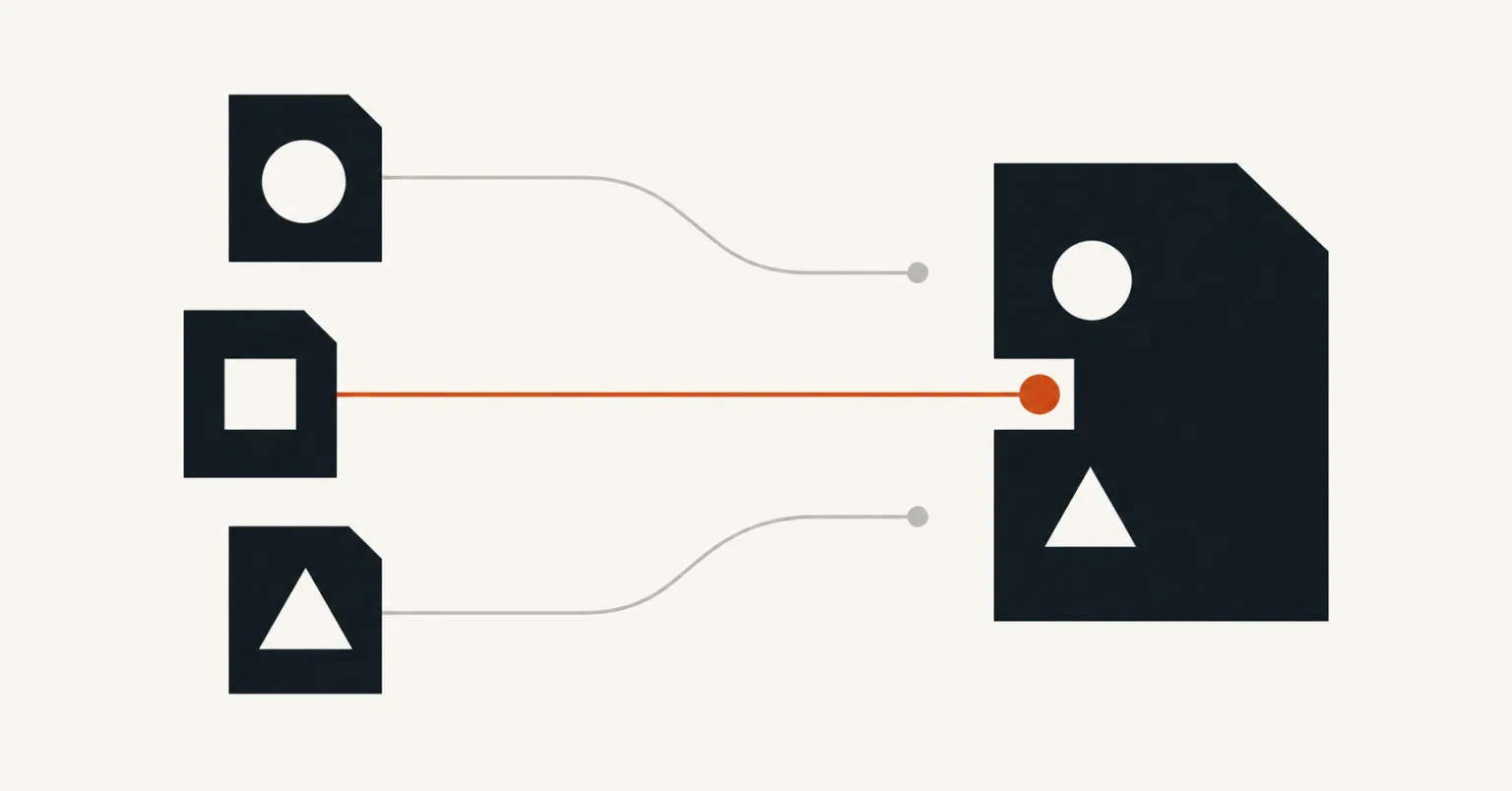
An old repair note can point you toward the right file. It can also send you back to a fix for a system that has since changed. An agent’s memory has the same question attached to it: what makes this old answer useful here? Keeping more experience gives the system more to draw on. It still has to decide which experience belongs to the present task.
The MemDev-Bench preprint builds controlled histories for coding tasks and examines how memory systems use them. The researchers find benefits in localization and editing, but also failures associated with reusing memories without reassessing their relevance. Their comparison with raw historical trajectories suggests that compressed memories can lose useful process information. Those findings are scoped to the benchmark and systems evaluated.
For a repository that changes over time, ask the memory to carry its reason for being relevant. The agent should have a way to connect the old problem with the current one, inspect what has changed, and explain why the lesson still applies. That is the job worth designing around.
Record the conditions behind the lesson
A reusable note should identify the problem it addressed, the repository or component involved, the evidence behind the conclusion, and the conditions under which it was valid. Without that context, a narrow fix can become an instruction that appears to apply everywhere.
Imagine a note saying that a particular validation step is unnecessary. If it omits the temporary environment limitation that motivated the choice, a later agent may treat it as a lasting rule. A better record preserves the reason, the relevant version, and the condition that should cause the advice to be reconsidered.
Write the note for the next person who finds it without the original conversation. What do they need to know to decide whether this lesson belongs here? Keep that part of the decision with the conclusion. The record can stay short. Its usefulness comes from the conditions it preserves, rather than the confidence with which it repeats an old answer.
Test helpful and unhelpful histories
An evaluation that supplies only relevant memories will not show the cost of retrieving an attractive but unsuitable example. Include related history, unrelated history, and cases where the repository has changed since the lesson was recorded. Keep the underlying task constant when comparing those conditions.
Measure whether memory helps the agent identify the correct location, make the correct change, and verify the result. Also count tasks the agent could solve without memory but fails after receiving it. Those regressions are important evidence about how the system uses past experience.
The preprint provides a reason to separate these categories rather than promoting one global memory score. The relevant operating question is which kinds of retained experience improve the organization’s actual development work, and which kinds create misleading shortcuts.
Preserve process where it matters
Look at what was squeezed out when an investigation became a lesson. Which alternatives were ruled out? Which command exposed the issue? Which promising change failed? A sentence can preserve the conclusion while dropping the route that made it convincing. The next task may need that route to recognize whether it has reached the same problem.
Keep a route back to the underlying work for decisions that need that context. A compact memory can point to a commit, a test result, or a task record instead of trying to restate every detail. The agent then has evidence to inspect when a superficial match is not enough.
This is especially useful when the repository has evolved. A linked change can show that the relevant component was replaced, the test moved, or the earlier constraint no longer applies. The memory remains an entry point into the investigation rather than becoming a substitute for it.
Make revision an ordinary operation
Memory needs a way to be corrected, qualified, and retired. If the only available operation is adding another note, conflicting instructions can accumulate while each remains phrased as an authoritative fact. An operator should be able to identify which record is current and why it supersedes another.
Distinguish a durable repository rule from a historical observation. The former belongs with the project’s maintained instructions and its review process. The latter can guide exploration but should be checked against the owning source before it controls a consequential action.
Define who can make that distinction and how a correction is recorded. For shared agent systems, a useful memory from one team may need additional scope before another team relies on it. Similar vocabulary does not establish identical operating conditions.
A useful memory record can also preserve an unsuccessful approach and the condition that made it fail. Keep that condition attached to the lesson. Otherwise a later agent may avoid a now-valid approach because an old failure has become an unexplained rule.
Start with a small replay
Choose a recently completed task and reconstruct the repository state in which it began. Run a bounded comparison with the current memory policy, a deliberately relevant history, and an unrelated one. Preserve the steps and the resulting change so the team can investigate disagreements.
Watch what the agent does when the repair note no longer fits. Can it use the old experience to find its way, then change direction when the current repository gives it a reason? Keep evidence of that decision in the evaluation. The useful memory is the one that helps the next investigation move forward, including the moment when the old answer has to be put aside.